Think you know how speed cameras work? From the famous 10% rule to changing lanes on the motorway, some popular driving advice could land you in trouble.
Speed cameras have been part of British roads for decades, but that hasn't stopped a few myths from doing the rounds. Whether it's something you've heard from a friend, read on social media or simply believed for years, there's plenty of confusion about what cameras can and can't do.
The trouble is, relying on the wrong information could leave you facing a speeding fine, penalty points or worse. And when it comes to road safety, it's always better to know the facts than take a chance.
So, let's clear up five of the most common speed camera myths that UK drivers still believe.
Myth 1: You're Allowed to Drive 10% + 2mph Over the Speed Limit
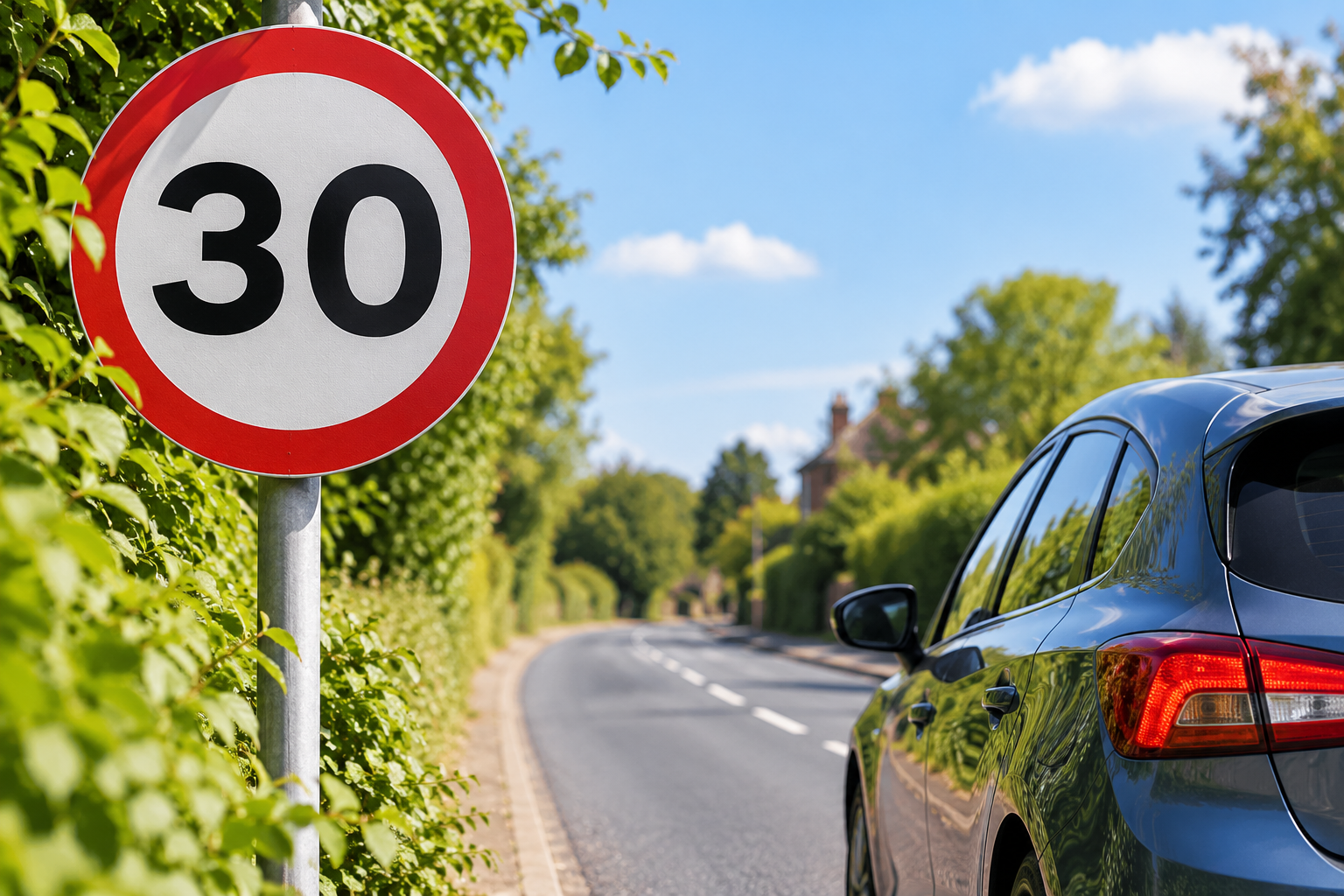
You've probably heard this one. Apparently, if you're driving in a 30mph zone, you can get away with doing 35mph without worrying about a speeding ticket.
It's a popular belief, and there's actually a reason it exists. But that doesn't make it a legal entitlement.
The Truth: It's Guidance, Not the Law
The idea comes from guidance issued by the National Police Chiefs' Council (NPCC), which many police forces use when deciding when to take enforcement action.
Under this guidance, enforcement would typically begin at:
35mph in a 30mph zone
46mph in a 40mph zone
57mph in a 50mph zone
79mph in a 70mph zone
However, these figures aren't legal allowances. The speed limit is still the maximum speed you're permitted to drive, and exceeding it by even 1mph is technically an offence.
Police forces also have discretion over enforcement, meaning you shouldn't assume you'll automatically be given a few extra miles per hour.
The NPCC's speed enforcement guidance explains how these thresholds are used, but they don't change the law.
The Accident Pad Tip🚗
Don't treat the speed limit as a starting point with a little extra added on. If the sign says 30mph, that's the limit.
Myth 2: If the Speed Camera Doesn't Flash, You Haven't Been Caught
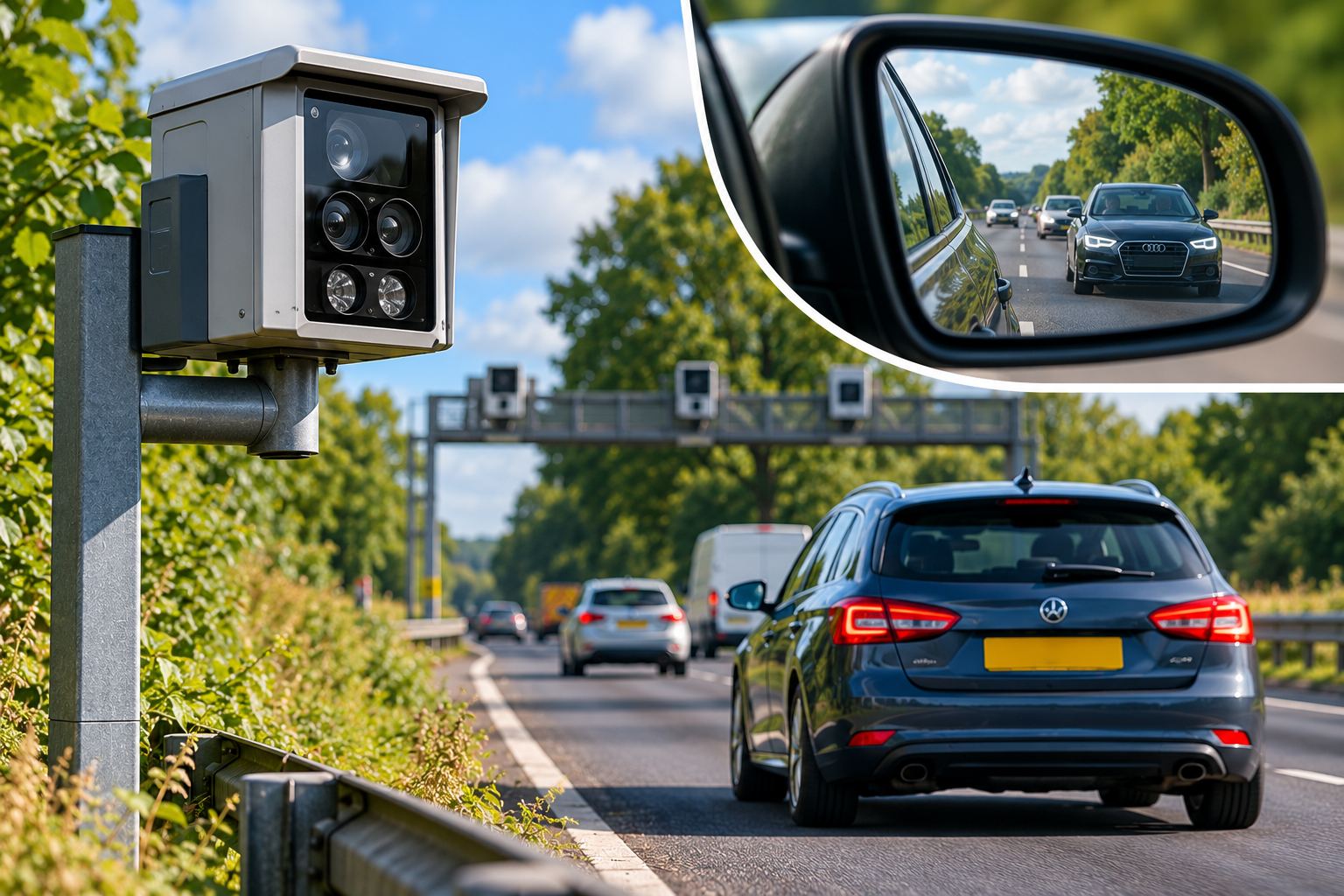
Remember those old speed cameras that produced a bright flash when someone drove past too quickly?
It's easy to see why some drivers still associate that flash with being caught speeding. After all, it was a pretty obvious sign that something had happened.
But speed camera technology has moved on considerably.
The Truth: Modern Cameras Don't Always Need a Flash
Many modern speed cameras can record offences without producing a visible flash. Some use infrared technology, while others rely on digital imaging systems that work in different lighting conditions.
Average speed cameras, for example, can monitor vehicles across several miles without drivers noticing anything unusual.
According to the RAC's guide to UK speed cameras, not all cameras produce a visible flash when recording a vehicle.
So, just because you haven't seen a sudden burst of light in your rear-view mirror, that doesn't necessarily mean you haven't been caught.
The Accident Pad Tip🚗
No flash doesn't mean no speeding offence has been recorded.
Myth 3: Braking Just Before an Average Speed Camera Will Keep You Safe
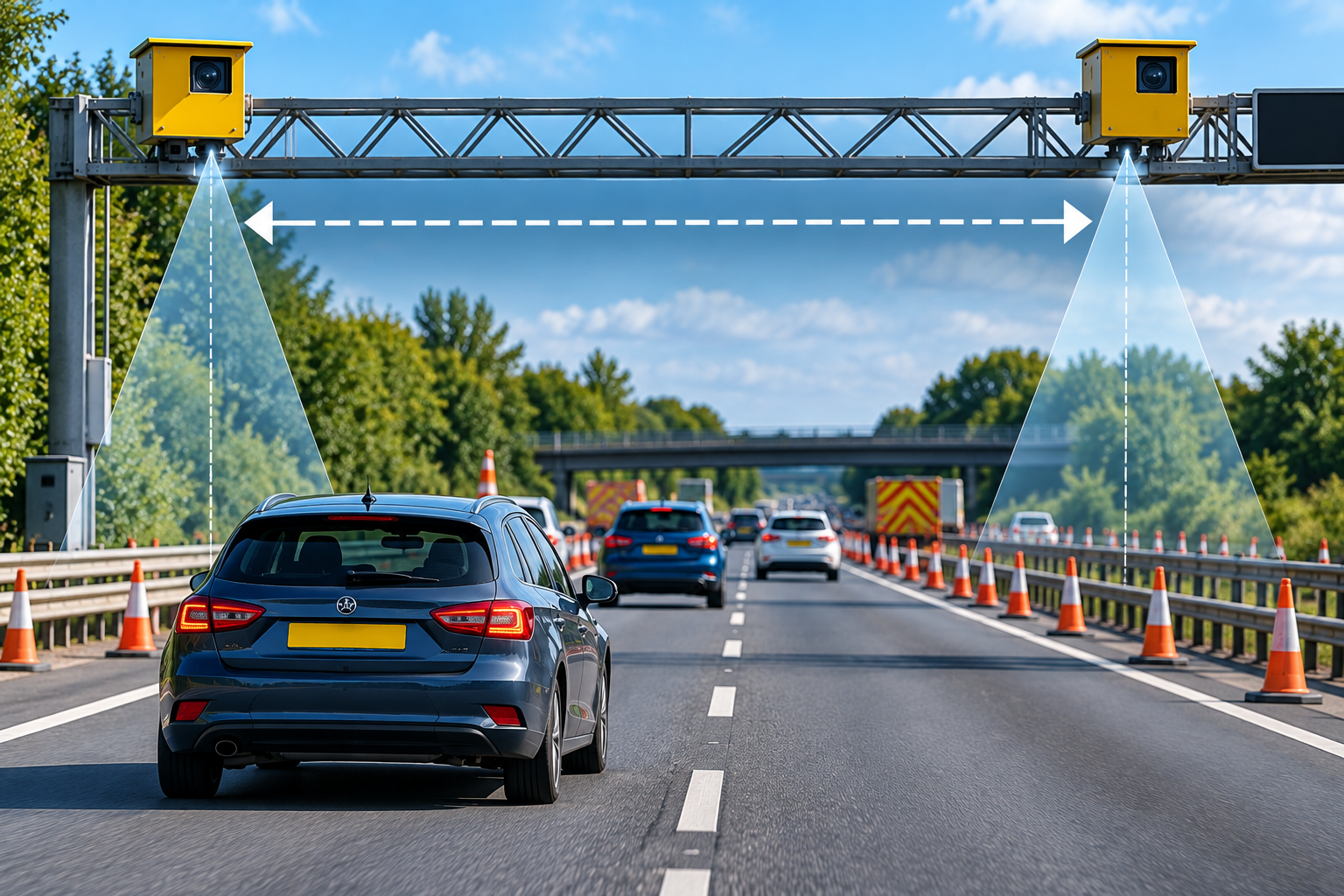
We've all seen it happen. You're driving along a motorway or through roadworks when the car in front suddenly slows down as it approaches a camera.
Then, once it's passed, the driver speeds up again.
The assumption seems to be that as long as you're travelling at the correct speed when you pass the camera itself, everything will be fine.
Unfortunately, that's not how average speed cameras work.
The Truth: They're Measuring Your Speed Over a Distance
Unlike traditional cameras that measure your speed at a particular point, average speed cameras calculate how quickly you've travelled between two or more locations.
They use Automatic Number Plate Recognition (ANPR) technology to identify your vehicle and record when it passes each camera.
The system then calculates your average speed based on the distance travelled and the time taken.
For example, if you're driving through a five-mile stretch of roadworks with a 50mph limit, slowing down to 50mph just as you pass a camera won't necessarily help if you've been travelling considerably faster between camera locations.
And because some systems can monitor vehicles across several sections of road, trying to work out where you can speed up isn't a particularly sensible strategy.
The Accident Pad Tip🚗
The safest and simplest approach is to maintain a legal speed throughout the entire monitored section.
Myth 4: Changing Lanes Can Fool Average Speed Cameras
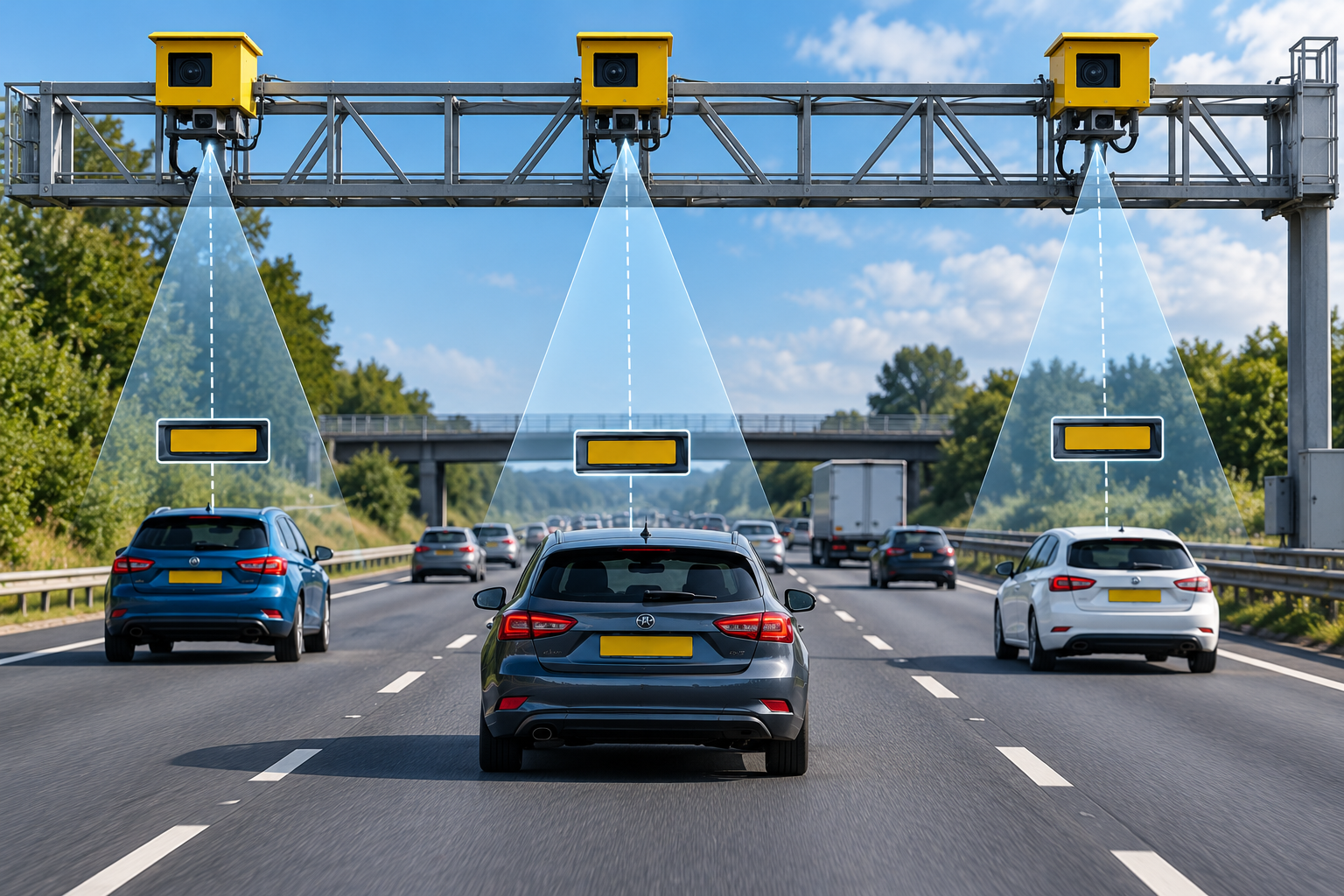
This is another myth that's been around for years, particularly among regular motorway drivers.
The theory is that if you move from one lane to another between average speed cameras, the system won't be able to identify your vehicle properly.
It might sound clever, but there's a fairly obvious problem with the idea.
The Truth: Cameras Track Your Registration, Not Your Lane
Modern average speed camera systems use your vehicle's registration number to identify it as you pass different camera locations.
That means it doesn't matter whether you're in the left-hand lane, the middle lane or the right-hand lane. The system can still recognise your vehicle and calculate its average speed.
The RAC has addressed this particular myth, explaining that modern systems can account for vehicles changing lanes.
And there's another reason not to try it.
Unnecessary lane changes, particularly at motorway speeds, can increase the risk of a collision. If you're concentrating on trying to outsmart a speed camera rather than what's happening around you, you're potentially creating a much bigger problem.
The Accident Pad Tip🚗
Changing lanes won't fool modern average speed cameras, and unnecessary manoeuvres could put you and other road users at risk.
Myth 5: Speed Cameras Have to Be Yellow and Clearly Visible
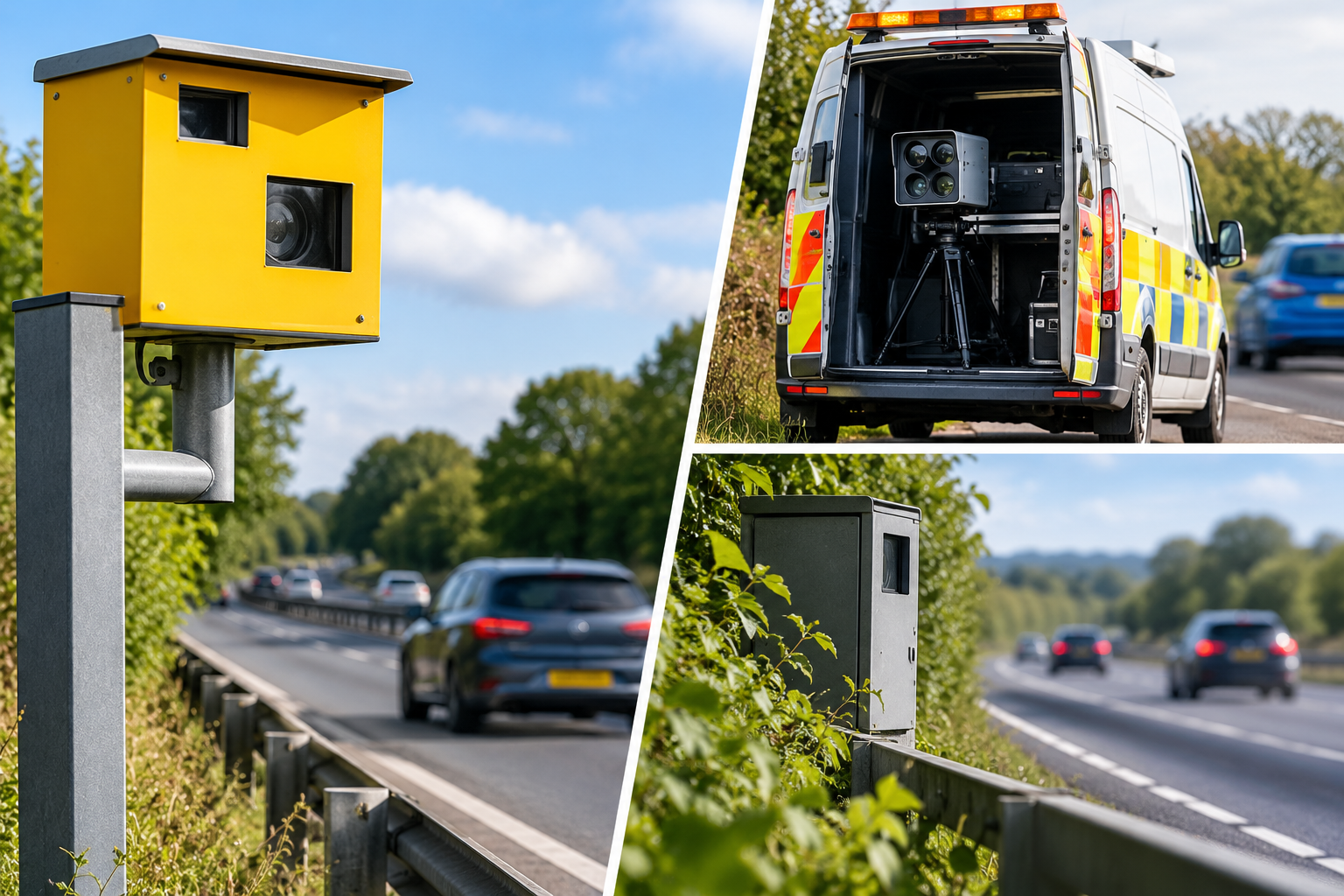
If you've spent much time driving around the UK, you'll probably be familiar with the bright yellow speed cameras positioned alongside roads and motorways.
They're designed to be noticeable, which has led some drivers to believe that cameras must always be clearly visible for speeding penalties to be enforceable.
But that's not quite right.
The Truth: Visibility Doesn't Determine Whether a Camera Can Enforce the Law
There are rules and policies around the visibility of certain speed cameras, particularly those installed on England's strategic road network.
However, there's no general legal requirement that every speed camera must be painted yellow or clearly visible for an offence to be enforceable.
Mobile speed camera vans, for example, can operate from various locations, while some enforcement equipment may be considerably less obvious than traditional roadside cameras.
The RAC explains that although yellow cameras are intended to improve visibility and encourage drivers to slow down, camera visibility isn't necessarily a legal requirement.
In other words, not spotting a speed camera isn't a defence against speeding.
The Accident Pad Tip🚗
Whether you can see a camera or not, the speed limit still applies.
What Happens If You're Caught Speeding in the UK?
Of course, the reason these myths matter is that getting caught speeding can have consequences beyond receiving an unwelcome letter through the post.
Depending on the circumstances and seriousness of the offence, you could face:
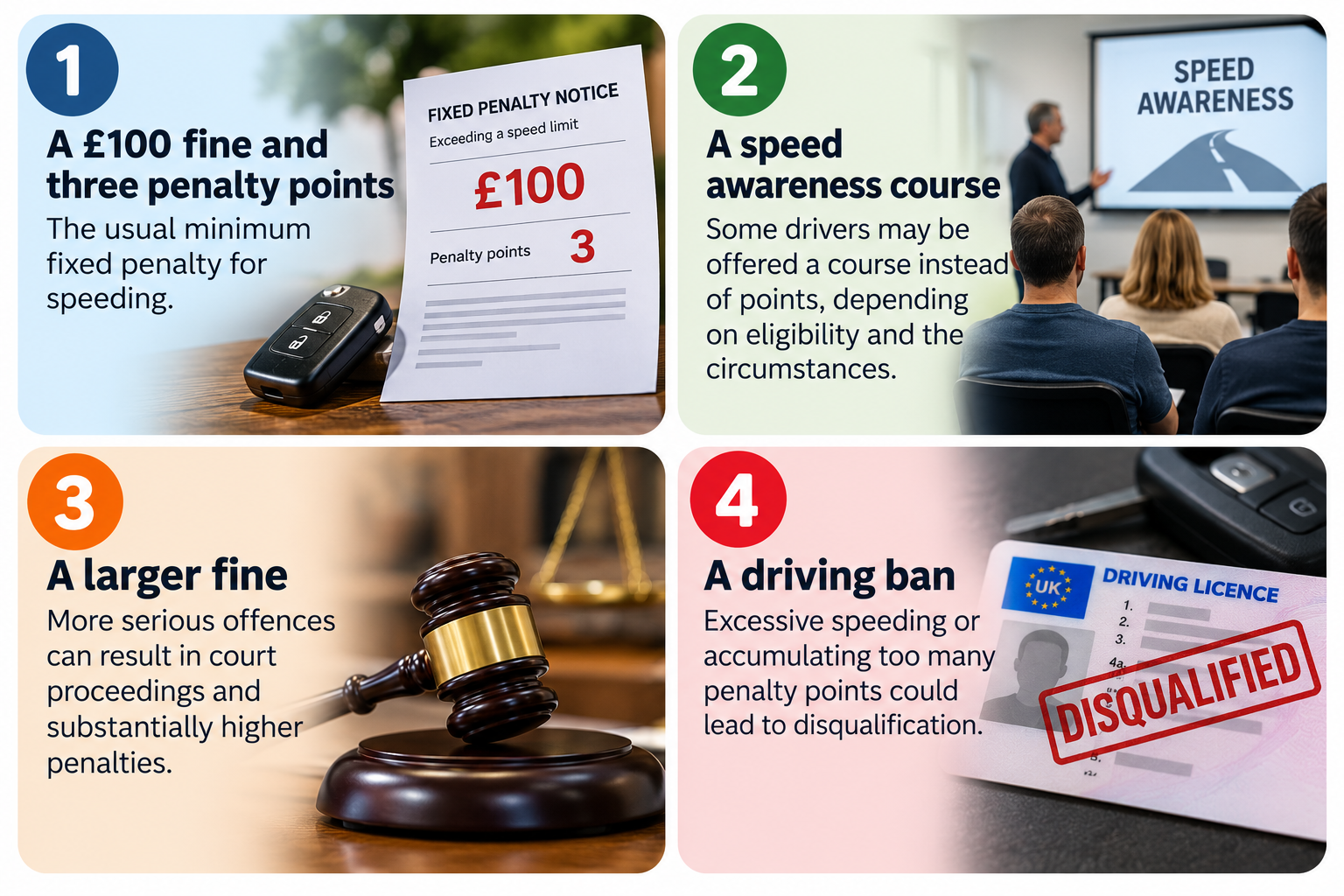
If you're caught by a speed camera, a Notice of Intended Prosecution will normally be sent to the registered keeper within 14 days, subject to certain legal exceptions.
You can find more information about penalties and the process on the GOV.UK speeding penalties page.
But there's something else worth remembering. Speed limits aren't simply there to help drivers avoid fines. They're an important part of reducing the risk and severity of road accidents.
Why Getting Your Speed Right Matters
It's easy to think of speeding as something that only becomes a problem when there's a camera nearby.
But the reality is that even a relatively small increase in speed can make a difference when something unexpected happens.
A pedestrian might step into the road, a vehicle could brake suddenly or another driver might make a mistake. When that happens, the faster you're travelling, the less time you have to react and the greater the distance your vehicle may need to stop.
And while we all like to think we're careful drivers, nobody can predict everything that might happen on the road.
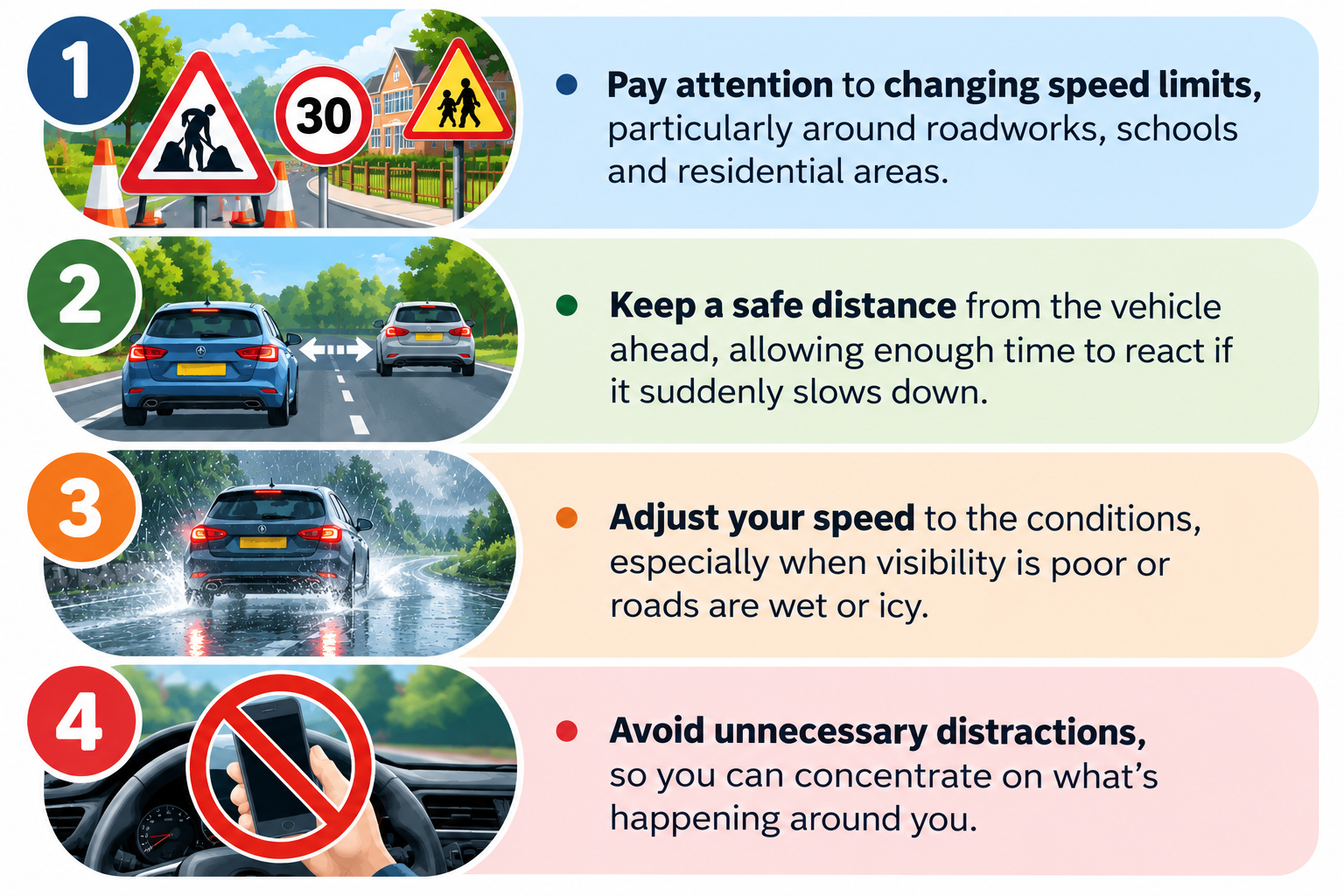
That's why it's worth remembering a few simple things:
Ultimately, staying within the speed limit isn't just about avoiding a ticket. It's about giving yourself the best possible chance of responding safely when something unexpected happens.
The Best Way to Avoid Speed Camera Trouble? Forget the Myths!
Speed camera technology has changed considerably over the years, but some of the advice drivers share hasn't kept up.
Whether it's relying on the famous 10% rule, expecting every camera to flash or believing that changing lanes will confuse the system, these myths could give drivers a false sense of security.
The simplest advice is still the best: know the speed limit, stick to it and concentrate on the road rather than trying to second-guess how cameras work.
And while driving responsibly can help reduce your chances of being involved in an accident, there's no way to eliminate every risk. Other drivers can make mistakes, road conditions can change unexpectedly and collisions can happen even when you've done everything right.

If the Unexpected Happens, Be Prepared with The Accident Pad
Designed to be kept in your glovebox, The Accident Pad provides a practical way to record important details following a road traffic accident, helping you capture the information you may need later.
Because when you're shaken up after a collision, remembering everything you need to write down isn't always easy.
Drive safely, forget the speed camera myths and keep The Accident Pad handy for those moments you hope never happen.
Safe driving,
Jenna x
Frequently Asked Questions About Speed Cameras and Speeding in the UK
Speed cameras are something most UK drivers are familiar with, but there's still plenty of confusion about how they work and what the rules actually say. Here are some answers to common questions to help separate the facts from the myths.
1. Is the 10% plus 2mph speeding rule legal in the UK?
No. The 10% plus 2mph rule is based on police enforcement guidance, not UK law. Although some police forces use these thresholds when deciding whether to take action, the legal speed limit remains the maximum permitted speed. Drivers can technically be prosecuted for exceeding it by even 1mph.
2. Can you get a speeding ticket for doing 31mph in a 30mph zone?
Yes, technically. Driving at 31mph in a 30mph zone is an offence, although police forces may apply enforcement thresholds when deciding whether to issue a penalty. You should never assume that exceeding the speed limit by a small amount is automatically acceptable.
3. Do speed cameras always flash when they catch you speeding?
No. Many modern speed cameras use infrared technology or other systems that don't produce a visible flash. This means you could be recorded exceeding the speed limit without noticing anything unusual.
4. How do average speed cameras work in the UK?
Average speed cameras use Automatic Number Plate Recognition (ANPR) technology to identify vehicles at different points along a road. By measuring the time taken to travel between those points, the system calculates a vehicle's average speed. If that average exceeds the applicable enforcement threshold, the driver may face a penalty.
5. Can changing lanes prevent average speed cameras from catching you?
No. Average speed camera systems can track vehicles across different lanes using their number plates. Changing lanes doesn't prevent the system from calculating your average speed, so it won't help you avoid detection.
6. Do speed cameras have to be yellow in the UK?
No. There is no general legal requirement for speed cameras to be painted yellow for enforcement to be valid. Although many fixed cameras are brightly coloured to make them more visible, a camera doesn't have to be yellow to detect speeding offences.
7. How long does it take to receive a speeding ticket in the UK?
For many camera-detected speeding offences, the registered keeper must normally be sent a Notice of Intended Prosecution (NIP) within 14 days of the alleged offence. There are exceptions, and the 14-day rule doesn't necessarily apply to every subsequent letter or to the driver's eventual receipt of paperwork.
8. What happens if you're caught speeding in the UK?
For a straightforward speeding offence in England and Wales, the usual fixed penalty is £100 and three penalty points. Depending on the circumstances, eligible drivers may be offered a speed awareness course instead. More serious offences can result in court proceedings, higher fines or disqualification.
9. Can you be caught speeding without a speed camera?
Yes. Police officers can detect speeding using handheld speed detection equipment, vehicle-mounted systems and other approved methods. You don't have to pass a fixed speed camera to be caught exceeding the speed limit.
10. What's the best way to avoid speeding fines?
The simplest approach is to stay within the posted speed limit and pay attention to changes, particularly around roadworks, schools and residential areas. Remember to adjust your speed to suit the weather, visibility and traffic conditions, even when that means driving below the limit.