What Learner Drivers Need to Know About New 2026 Driving Test Booking Rules
Learning to drive comes with plenty to think about. There are lessons to book, manoeuvres to master, theory questions to revise and, eventually, the small matter of passing your practical test.
But in 2026, booking that practical driving test changed too.
The Driver and Vehicle Standards Agency (DVSA) has introduced new rules covering car driving tests in England, Scotland and Wales. They're designed to give genuine learners more control over appointments and make it harder for unofficial booking services to obtain tests and charge learners extra for them.
So, if you're learning to drive, or helping a son, daughter or family member who is, here's what you need to know.
You Now Have to Book Your Own Driving Test
This is probably the biggest change.
Since 12 May 2026, the person taking the car driving test must book and manage the appointment themselves. Driving instructors and third-party booking companies can no longer do it on a learner's behalf.
This isn't simply a change to the DVSA website. Regulations introduced in April 2026 changed the law so that an application for a Category B practical test cannot be made by somebody else on behalf of the applicant.
Your instructor can still help you prepare. In fact, the DVSA recommends speaking to them before booking to make sure you're likely to be ready. They can also give you their instructor reference number, which you can add to the booking so the system can take their availability into account.
They just can't make the booking for you.
Why Have the Rules Changed?
For many learner drivers, preparing for the test hasn't been the only challenge. Actually finding a test appointment has been difficult too. Part of the problem has been unofficial third-party services obtaining appointments and then charging learners additional fees to access them.
The DVSA says the changes are intended to make the booking system fairer, stop people charging excessive fees for tests and put learners back in control of their own appointments.
In other words, getting a driving test shouldn't depend on who has the fastest bot or who is willing to pay the biggest mark-up.
You Can Only Change Your Test Twice
This is another important one if you're tempted to book a test and worry about the details later.
Since 31 March 2026, you can only make two changes to an existing car driving-test booking. Previously, you could make up to six.
Changing the date or time, changing the test centre, or swapping your appointment with another learner counts as a change. Interestingly, changing more than one of those things at the same time still counts as a single change.
Updating your contact details or adding or removing your instructor's reference number doesn't use one of your changes.
Once you've used both changes, you'll normally need to cancel the test and book another if you need to alter it again.
Accident Pad Tip 🚘
Don't rush into booking a date simply because you've spotted an appointment. Talk to your instructor first, think realistically about whether you'll be ready and check that the date works for both of you.
You Can't Simply Move Your Test Anywhere in the Country
There's another restriction that's designed to stop people booking appointments they never genuinely intend to use.
Since 9 June 2026, if you want to move an existing test to another centre, you're generally limited to one of the three nearest test centres to the centre where your appointment is currently booked, or the centre originally booked during that current booking.
So, booking a test hundreds of miles away simply because you've found an available slot and hoping to move it closer to home later isn't a particularly good strategy anymore.
The DVSA's advice is simple: book at a test centre you actually intend to use.
Be Careful With Driving-Test Cancellation Apps
Under the current rules, you are not allowed to use unofficial services that scan the DVSA booking service looking for available appointments. That includes driving-test cancellation finder websites and apps. The DVSA monitors the booking system and can take action if its terms and conditions are broken.
This can include suspending someone's online access to the booking service or cancelling their booking. Current DVSA guidance says an online-access suspension can last for 12 months, although there is a process for requesting a review. That's why it's worth being very careful about giving your driving licence or booking details to an unofficial service promising to find you an earlier test.
Can Parents Still Help Their Children Book?
Yes. There's a difference between helping somebody make a booking and making it for them.
The DVSA says a friend, family member or somebody who supports the learner as part of their job can still help. However, the learner must be there and should complete as much of the booking process themselves as possible.
So, sitting beside your son or daughter and helping them navigate the booking system is fine, but taking their details and booking the test without them isn't.
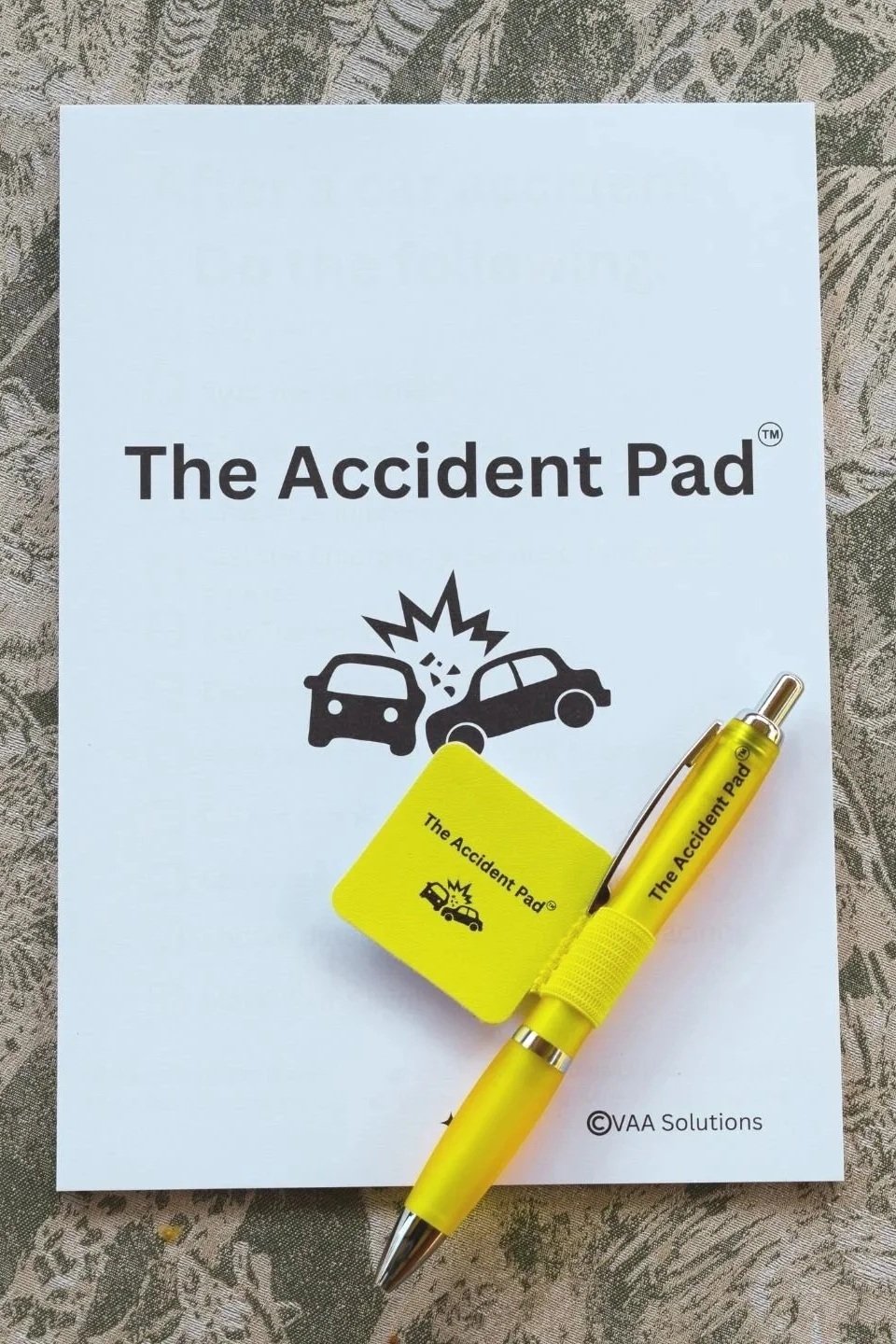
The Accident Pad is a compact (A5) pad containing all the essential prompts, checklists, and up-to-date professional advice you’ll need to capture the right details after being involved in a car accident.
SHIPPING From the 9th of March 2026
What Should Learner Drivers Do Now?
The new system makes planning ahead more important.
Before booking your practical test, make sure you've spoken to your instructor and have a realistic idea of when you'll be test-ready. Check their availability, choose a test centre you genuinely intend to use and think carefully before changing an existing appointment.
And use the official GOV.UK booking service rather than relying on unofficial services to find or manage appointments for you.
There is still significant demand for tests. As of late September 2026, the DVSA says it releases a new week of appointments at 6am every Monday, with those appointments currently being released 24 weeks ahead. Earlier appointments created by cancellations can appear at any time during the week.
That makes patience, unfortunately, another useful skill for learner drivers.
Putting Learners Back in the Driving Seat
Passing your driving test is a big milestone. Securing the test itself shouldn't become a competition between learners, bots and businesses trying to profit from scarce appointments. Whether these changes ultimately reduce waiting times remains to be seen, but they do change how learners need to approach booking their test.
So, here’s my advice in short.
Plan ahead, book your own test, choose your date and test centre carefully, and be very wary of unofficial services promising shortcuts.
And once you do pass and start driving independently, there’s one more important lesson worth remembering…
…being a responsible driver also means being prepared for the unexpected.
Nobody sets out expecting to be involved in an accident, but unfortunately, they do happen. And for a new driver in particular, those first few moments after a collision can be stressful and confusing.
Even a relatively minor bump can leave you shaken, and suddenly you’re expected to remember what information to collect, what photographs to take and what details you may need later.
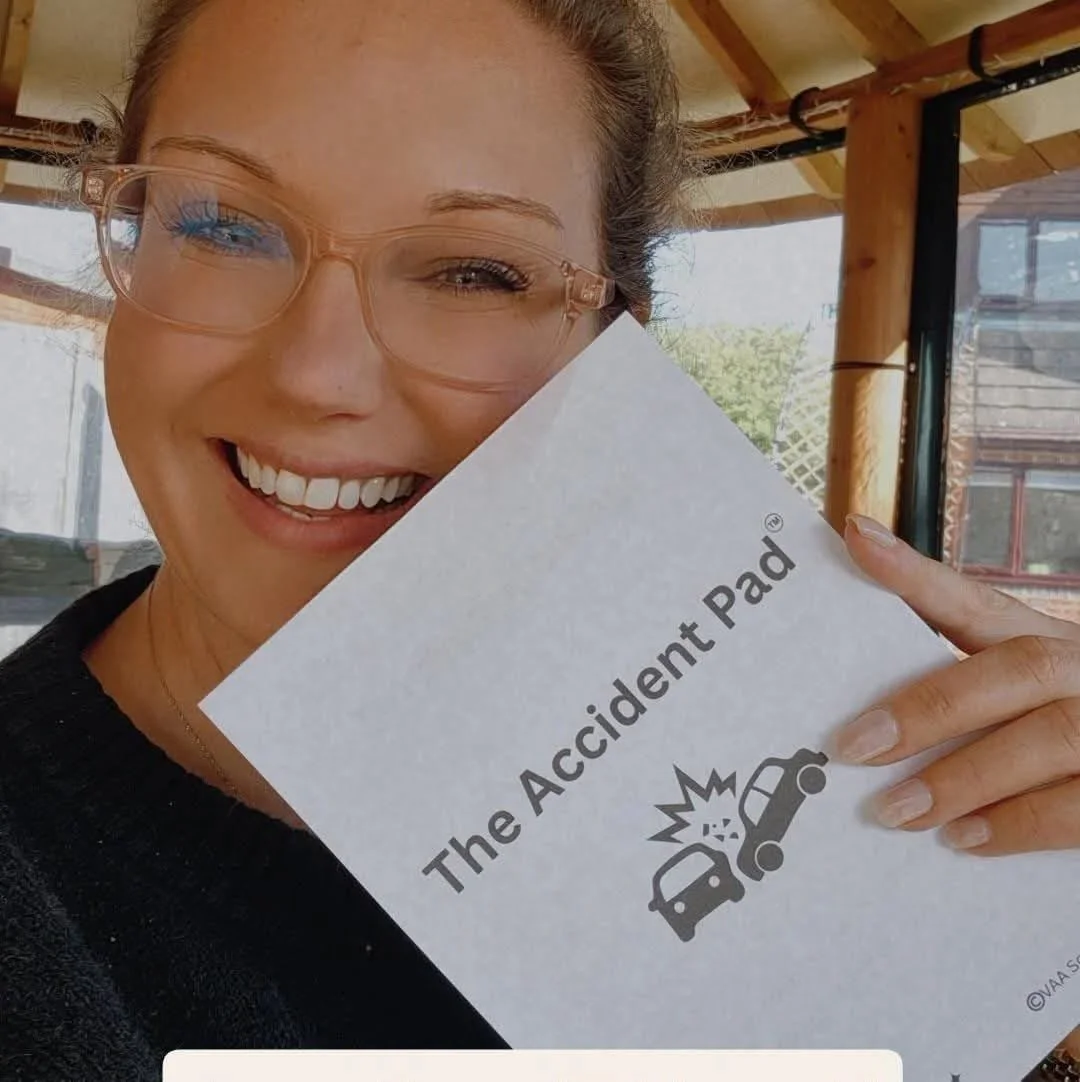
That’s where the Accident Pad can really help.
Kept in your glovebox, it gives you a simple, structured way to record the important information at the scene, while the details are still fresh. Rather than relying on memory at a stressful moment, you have something there to guide you through what you need to capture.
Hopefully, it’s something you’ll never need to use. But as you gain the freedom and independence that comes with passing your test, being prepared for the unexpected is part of becoming a responsible driver too.
I hope this post helps new drivers and the parents of new young drivers, but if you have any questions you’d like to ask, feel free to leave a comment or send me an email at info@theaccidentpad.com
Safe driving,
Jenna x