The Accident Pad for Fleet Managers. Helping Drivers Know What to Do After an Accident
If you manage a fleet of vehicles, you’ll already have plenty to think about. Servicing, insurance, fuel, driver safety, schedules, compliance… the list goes on. But there’s another question I think every fleet manager should ask:
If one of your drivers had an accident tomorrow, would they know exactly what to do?
It sounds simple, but accidents aren’t calm, organised situations. People can be shaken, stressed and trying to remember what they’ve been told to do while dealing with another driver, traffic and possibly the emergency services.
That’s exactly why I created The Accident Pad, and why I think it can be particularly useful for businesses running fleets of cars and vans.
Your Drivers Are Spending A Lot Of Time On The Road
The more time your vehicles spend on the road, the more important it becomes to be prepared for something going wrong. And Britain's vans are certainly clocking up the miles.
Those numbers really put things into perspective.
Whether you have five vans or 500, every journey brings a degree of risk. You can have excellent drivers, well-maintained vehicles and good safety procedures, but you can't control everything that happens around them.
🚗The Accident Pad Tip
Don't just prepare your drivers to avoid accidents. Make sure they're prepared for what to do if one happens.
An Accident Can Be Overwhelming – Even For An Experienced Driver

We tend to imagine that if we have an accident, we'll calmly exchange details, take photographs and remember everything we're supposed to do. Reality can be very different.
An accident can leave even an experienced driver shaken. And when you're stressed, remembering a company procedure you were shown six months ago isn't necessarily easy. The Accident Pad gives your driver something physical to reach for and work through at the scene.
It can help prompt them to collect important information such as:
The other driver's details, vehicle information and insurance details
Photographs, witness information and other useful details about what happened
Instead of expecting your driver to remember everything, you're giving them a clear process to follow.
🚗The Accident Pad Tip
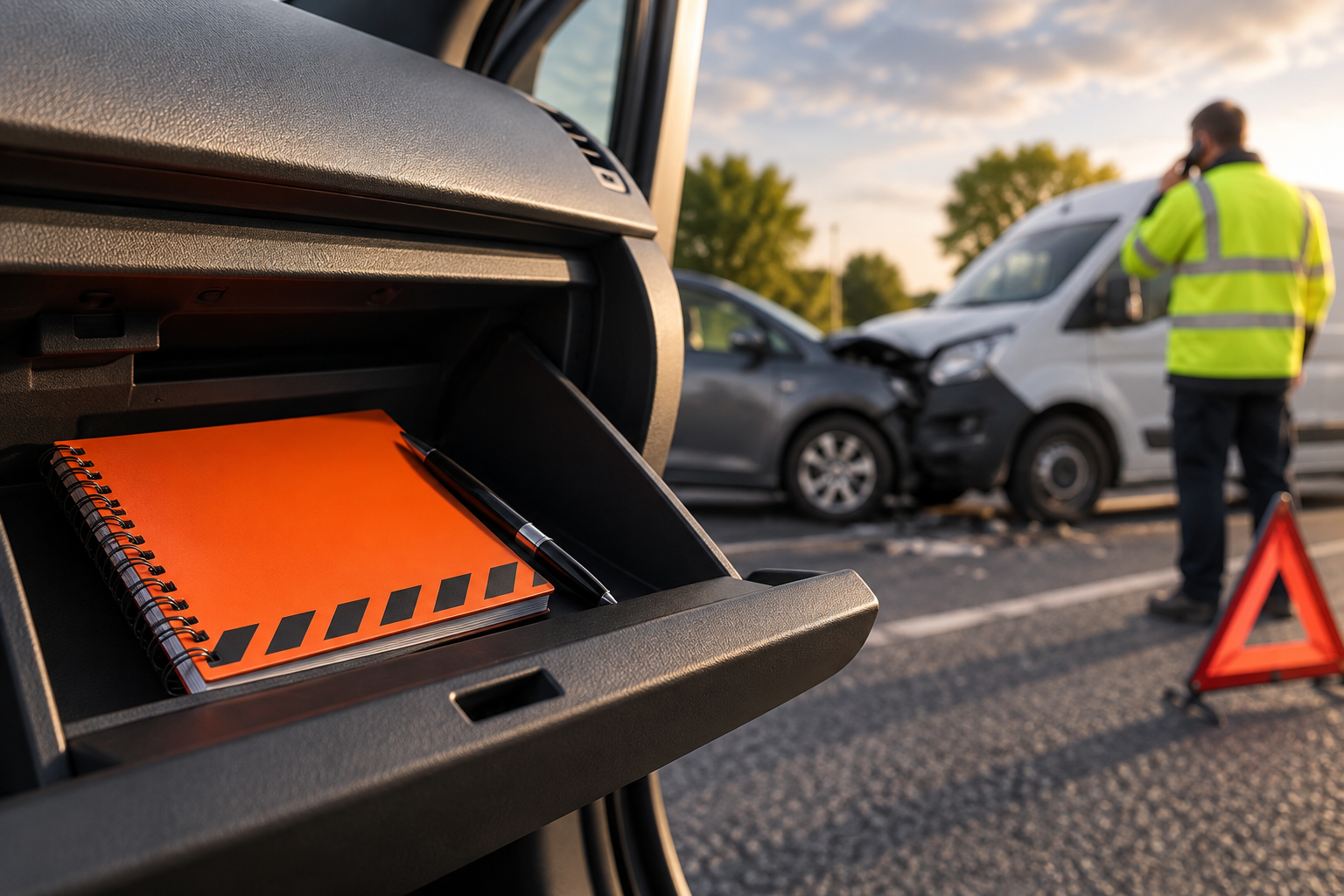
Keep the pad somewhere obvious and accessible in every vehicle. The glovebox is ideal, and make sure drivers know it's there before they need it.
It Helps Create A More Consistent Accident Process Across Your Fleet
This is where I think The Accident Pad becomes particularly useful for fleet managers.If ten different drivers have ten different ideas about what they should do after an accident, the information coming back to you can be inconsistent.One person remembers photographs but forgets witness details. Another gets the registration but doesn't make a note of the circumstances. Someone else assumes they'll remember everything when they get back to the office.
The Accident Pad gives everyone the same starting point.
And that fits nicely with good fleet management. HSE guidance says employers should make drivers aware of company work-related road-safety policies through measures such as written guidance, handbooks, training and induction. HSE also recommends having a system for workers to report work-related road incidents and near misses.
The Accident Pad isn't a replacement for those policies or training. It's a practical way of supporting them when your driver is actually standing at the roadside.
🚗The Accident Pad Tip
Make The Accident Pad part of your driver induction. Take five minutes to show new drivers where it is and explain when and how they should use it.
It Can Help You Get Better Information Back To The Business
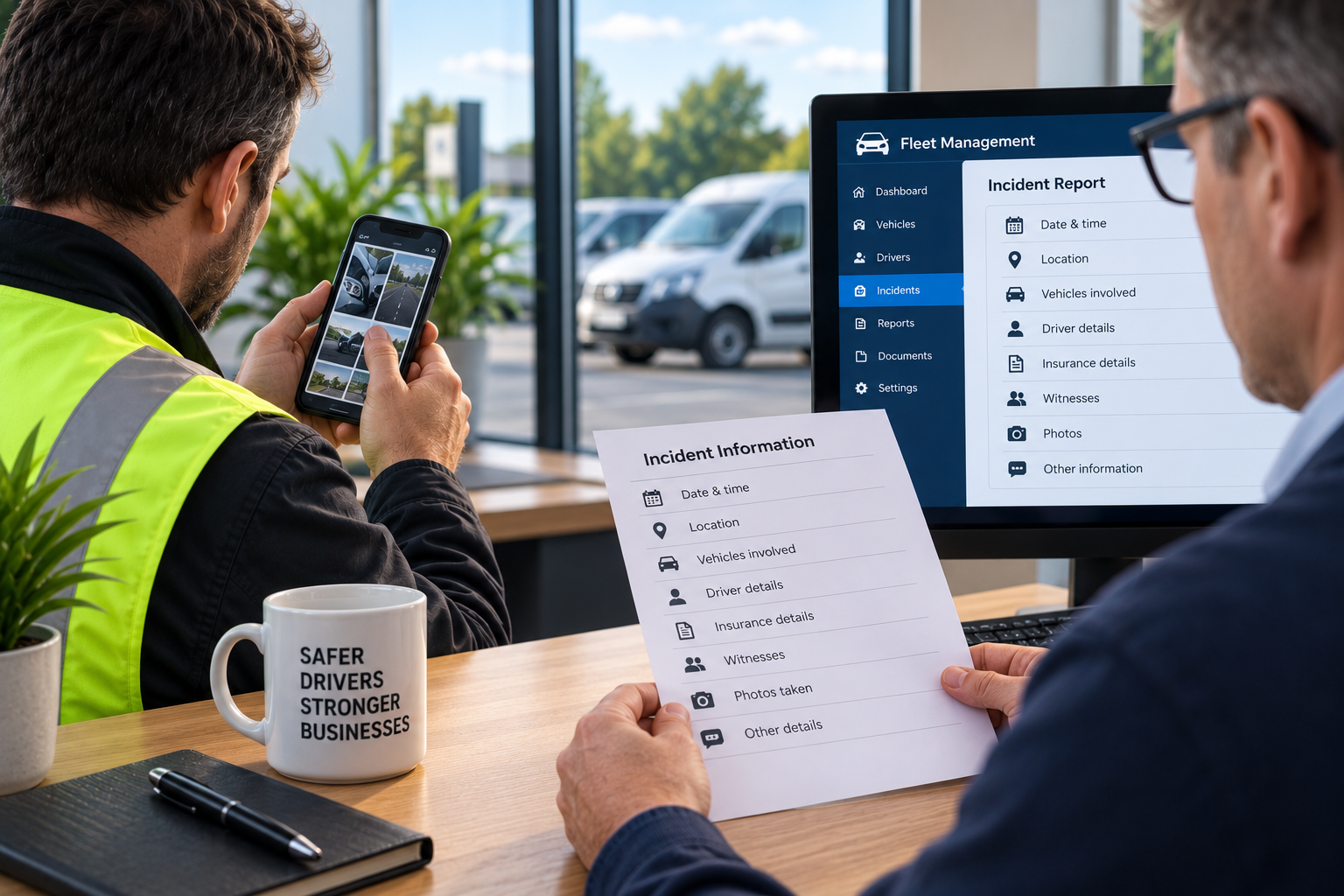
After an accident, your insurer, fleet manager or claims team is going to want information. The better the information collected at the scene, the easier it can be to build an accurate picture of what happened.
That can include things your driver may not immediately think about when they're shaken:
Details of the people and vehicles involved, witnesses, photographs, location and relevant circumstances
A clear record made at the time rather than relying on somebody's memory hours or even days later
For a fleet manager, that means The Accident Pad isn't just something for the driver. It can help create a clearer flow of information back into the business too.
🚗The Accident Pad Tip
Review the information you normally need following an accident and make sure your drivers understand why collecting it at the scene matters.
You Can Tailor The Accident Pad To Your Business
This is one of the things I particularly want fleet managers to know.
The Accident Pad can be branded and tailored to your business.
So rather than simply handing drivers a generic accident guide, we can work with you to incorporate information that's relevant to your organisation and its procedures. That might mean helping drivers understand who they need to contact internally, what your company expects them to do or what information needs to come back to the fleet manager.
For me, that's where it becomes much more than a pad sitting in the glovebox. It becomes part of your accident procedure.
And because it's physically there in the vehicle, your driver doesn't have to hunt through emails, find an old handbook or try to remember a procedure while standing at the roadside.
🚗 The Accident Pad Tip
If your business already has an accident procedure, don't reinvent it. Think about how we can tailor The Accident Pad so it supports the process you've already put in place.
It Shows Your Drivers You've Thought About Them Too
Fleet management isn't only about protecting vehicles and controlling costs. There's a person sitting behind every steering wheel.
I think there's something reassuring about getting into a company vehicle and knowing your employer has thought about what happens if your day suddenly goes very wrong.
You hope your drivers will never need The Accident Pad.
But if one of them is standing beside a damaged vehicle, feeling shaken and wondering what they're supposed to do next, having a straightforward guide within reach could make those first few minutes feel a little more manageable.
🚗The Accident Pad Tip
Ask your drivers how confident they feel about dealing with an accident. Their answers might highlight gaps in your current procedures that you hadn't considered.
One Little Pad. A Lot Less To Remember.
You can have policies, training, technology and procedures in place, and they're all important.
But accidents happen in the real world. They're stressful. They're unexpected. And they rarely happen when the fleet manager happens to be standing beside the driver. That's why I like keeping things simple.
Put The Accident Pad in every vehicle. Make sure every driver knows it's there. And give them something straightforward to follow if the worst happens.
Because when you're managing a fleet, you can't be in the passenger seat of every vehicle, but The Accident Pad can be in every glovebox.
Get In Touch
If you manage a fleet of cars or vans, get in touch and tell us how your business currently handles accidents. We can talk about how The Accident Pad could be branded and tailored to work alongside your existing procedures.
Because accidents are stressful enough.
The Accident Pad for Fleet Vehicles FAQs
If you manage company cars or vans, you might be wondering how The Accident Pad would actually work across your fleet. So, I’ve answered a few of the questions I’m often asked by businesses below. And if there’s anything I haven’t covered, just get in touch. I’m always happy to have a chat.
What is The Accident Pad?
The Accident Pad is a practical guide kept in the vehicle that helps drivers know what to do following an accident. It prompts them through the important information they should collect at the scene, when it can be very easy to forget something.
Why is The Accident Pad useful for fleet managers?
You can’t be with every driver when they’re out on the road. The Accident Pad gives each driver a consistent process to follow after an accident, helping your business receive clearer and more complete information about what happened.
Can The Accident Pad be used in company cars as well as vans?
Absolutely. The Accident Pad can be kept in cars, vans and other business vehicles. Whether you operate a handful of company cars or a much larger fleet, the principle is exactly the same.
Can The Accident Pad be branded for our business?
Yes. We can fully brand The Accident Pad for your business, making it something that feels like part of your own fleet documentation rather than another generic form sitting in the glovebox.
Can we include our own accident procedures?
Yes. The content can be tailored to reflect your organisation’s requirements, helping drivers understand what your business wants them to do and who they should contact following an accident.
Does The Accident Pad replace our existing fleet accident procedure?
No – it’s designed to support it. Think of The Accident Pad as the practical bit that’s actually there with your driver at the roadside, helping them follow the procedure you already have in place.
What information does The Accident Pad help drivers collect?
It guides drivers through recording important information such as details of the people and vehicles involved, insurance information, witnesses, photographs and the circumstances surrounding the accident.
Where should drivers keep The Accident Pad?
I recommend keeping it somewhere obvious and easy to reach – usually the glovebox. It’s also worth showing drivers where it is when they receive a vehicle, rather than leaving them to discover it after an accident!
Is The Accident Pad suitable for small business fleets?
Definitely. You don’t need hundreds of vehicles to benefit from having a consistent accident process. If your business has employees driving company cars or vans, even a small fleet can benefit from being better prepared.
How can I order The Accident Pad for my vehicle fleet?
Just get in touch and tell me a little about your fleet and what you need. We can then discuss quantities, branding and whether you’d like the content tailored to your existing accident procedures.
Got another question?
Drop me a message and I’ll be happy to help.
Safe driving,
Jenna x