Menopause, Driving… and Being Kind to Yourself

I’ve finally reached perimenopause, and I’ll be completely honest… it’s a constant learning curve.
If you’re a woman going through perimenopause or deep into the full-on menopause, the following won’t surprise you in the slightest.
Some days I feel completely like myself.
Other days I’m dealing with brain fog, poor sleep, the odd wave of anxiety, or one of those moments where I walk into a room and can’t quite remember why I went in there in the first place.
Like many women, I’ve discovered that menopause can affect your life in all sorts of surprising ways. And one of the things I’d never thought about is how it might affect my driving.
I’ve always been a confident driver, but there have been moments where I’ve felt a little more tired than usual behind the wheel, or where busy roads have felt just that bit more frightening than they used to.
And talking to other women, I’ve realised I’m not alone in the experience.
So I thought it might be helpful to share a few practical things that can make driving feel calmer and safer during perimenopause and menopause…
If you have any other helpful tips to share, please let me know in the comments or send me an email and I’ll share them with others.
Taking the Pressure Off Yourself
If you’ve noticed that certain types of driving make you feel a bit uneasy, like motorways, fast A-roads, busy roundabouts or complicated junctions, please know that this is incredibly common. A lot of women going through perimenopause and menopause experience the same thing.
The important thing is not to be hard on yourself about it.
Instead of pushing yourself straight back into situations that feel overwhelming, it often helps to take things gently and build your confidence back at your own pace.
That might mean choosing quieter times of day to drive, taking shorter stretches of motorway, or simply planning your route in advance so everything feels a little more predictable.
And sometimes, before you even turn the key, just taking a few slow, steady breaths can help settle those nerves more than you might think.
Making the Car a More Comfortable Place to Be

Perimenopause and menopause can sometimes throw the occasional curveball. One minute everything feels perfectly normal… the next there’s a hot flush, a wave of dizziness, or just that slightly unsettled feeling that seems to arrive out of nowhere.
When that happens, driving can suddenly feel a lot less comfortable than it normally would.
Luckily, a few small adjustments can make a real difference. A car that feels cool, calm and comfortable can help you stay relaxed and focused if symptoms decide to pop up during a journey.
Simple things that can help include:
Keeping the car well ventilated or using the air conditioning
Wearing breathable or lighter clothing on warmer days
Keeping a bottle of water nearby so you can stay hydrated
Planning short breaks on longer journeys if you need them
These little changes might seem small, but they can make the car feel like a much more manageable place to be if your body suddenly decides to do its own thing.
And if you ever feel dizzy or light-headed while driving, it’s always best to pull over safely and give yourself a moment until you feel steady again before carrying on. If dizziness becomes something that happens regularly, it’s a good idea to mention it to your GP so they can offer a bit of extra advice and reassurance.
Menopause brings plenty of changes, so making your driving environment a little more comfortable is simply one way of helping your body navigate those shifts a bit more easily.
Helping Your Brain Stay Focused
Brain fog is one of those menopause symptoms many women recognise straight away. On certain days it can feel as though your brain is moving a little slower than usual, or that concentrating takes more effort than it used to.
That can be frustrating at the best of times, and even more so when you're driving.
One simple way to make things easier is to reduce anything that adds extra mental effort during a journey. Giving yourself plenty of time to get where you’re going means you’re not rushing, and keeping music or podcasts at a low level can make the car feel calmer and easier to focus in.
Even using sat-nav for familiar routes can help, as it removes the need to think about directions and lets you concentrate fully on the road ahead.
These little tweaks can take the pressure off on those foggy days. And if brain fog starts to feel like a regular companion, speaking with your GP may help. some women find treatments such as HRT improve concentration and make everyday tasks feel clearer again.
Getting the Right Support
One thing many menopause specialists often suggest is keeping track of your symptoms for a while. It might sound a little clinical at first, but it can actually be really useful.
When you jot things down, patterns often start to appear, like certain times of day when you feel more tired, particular triggers for symptoms, or days when everything feels a bit easier. Once you can see those patterns, it becomes much easier to understand what your body is doing and plan around it.
Some women find apps helpful for this. The Balance Menopause app, created by menopause specialist Dr Louise Newson, is one that’s often recommended. It allows you to track symptoms, learn more about what’s happening in your body, and access reliable information without having to trawl through endless websites.
Apps like this can help you:
Track symptoms and spot patterns over time
Keep a simple record to share with your GP if needed
Access clear, reliable information about menopause
Feel more in control of what’s happening in your body
And when it comes to driving specifically, a little extra support can go a long way too. If your confidence has dipped, even slightly, some women choose to book a few refresher driving lessons or work with a driving confidence coach.
It’s not about going back to square one, but more of a way to rebuild that sense of ease behind the wheel.
In truth, many experienced drivers do this at different points in life, and it can make a real difference. Sometimes a bit of guidance, reassurance, or a fresh perspective is exactly what helps things click back into place again.
Talking to the People Around You

One of the most helpful things you can do is simply talk about what’s going on.
Menopause can sometimes feel like something you’re expected to “get on with”, but in reality it’s much easier when the people around you understand what you’re dealing with. Letting your partner, family or close friends know how you’re feeling can make a real difference, especially on the days when symptoms are stronger than usual.
That might mean asking someone else to drive if you’re not feeling at your best, or having someone help plan a journey so you don’t feel under pressure. Sometimes it’s simply about knowing there’s someone there who understands if you need to slow things down.
Having those conversations also helps remove the sense that you have to handle everything alone. When people understand what’s going on, they’re far more likely to offer support, patience and practical help.
And often, saying things out loud can take a surprising amount of pressure off your shoulders.
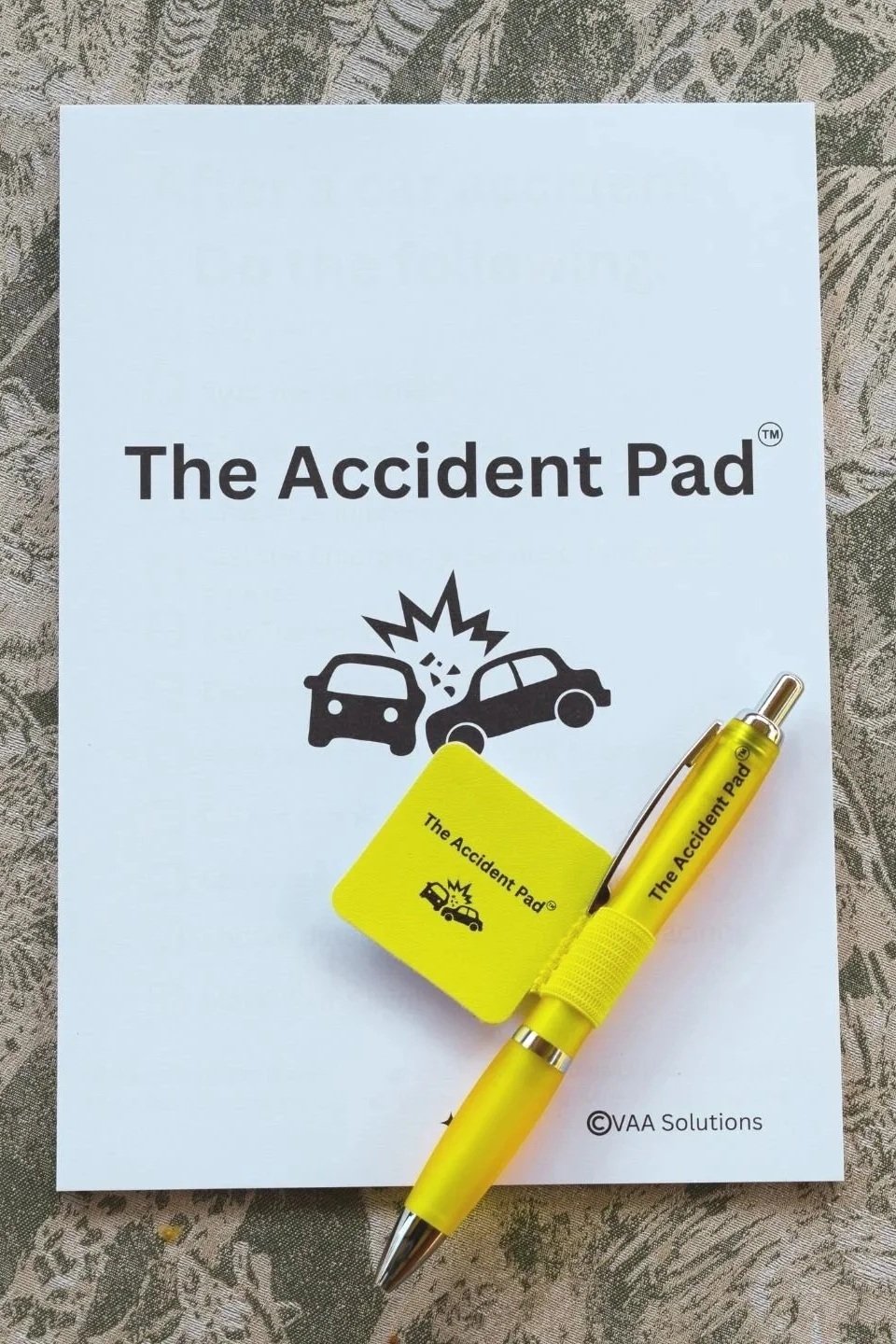
The Accident Pad is a compact (A5) pad containing all the essential prompts, checklists, and up-to-date professional advice you’ll need to capture the right details after being involved in a car accident.
SHIPPING From the 9th of March 2026
Why I Created The Accident Pad

One thing menopause has reminded me of is that when we’re stressed or shaken up, our minds don’t always work the way we’d like them to.
That realisation is one of the reasons The Accident Pad exists.
A few years ago, I was involved in a car accident myself. It all ended well, thankfully, but standing at the roadside trying to remember what information I needed to collect was far more difficult than I expected. Your heart is racing, people are talking, traffic is passing by, and your brain suddenly decides that now would be a good moment to forget even the most basic things.
Add brain fog, shock or stress into the mix and it becomes even harder to think clearly.
That experience made me realise how useful it would be to have something simple in the car that takes the thinking out of the situation. Something that guides you through what you need to do so you’re not relying on memory at a moment when your head might be spinning.
That’s exactly what The Accident Pad is designed to do. It sits in your glovebox, ready for the moment you hope never comes, and walks you through the key details you need to capture after an accident.
It prompts you to record things like:
✔️Driver and vehicle details
✔️Insurance information
✔️The date, time and location of the incident
✔️Contact details for witnesses
✔️Notes about what happened while it’s still fresh in your mind
There’s nothing complicated about it. No technology, no apps, and no trying to remember what you should be asking while standing at the roadside.
It’s just a simple, practical and physical tool that helps you stay organised in a situation that can otherwise feel overwhelming.
And please remember…
Menopause affects every woman differently, but if driving sometimes feels a little harder than it used to, please know that you’re not alone.
With a few small adjustments, a bit of support and some kindness towards yourself, most women continue to drive safely and confidently for many years. And sometimes the most important thing we can do is give ourselves permission to slow down when we need to.
If you’d like to know more about The Accident Pad, or you have a question, feel free to send me a message.
Take care, drive safely, and look after yourself.
Jenna x
Questions You Might Have About Menopause and Driving
Since sharing some of my experiences with perimenopause and driving, I’ve had quite a few conversations with other women who are going through similar things. It turns out many of us have the same questions, worries and little moments of uncertainty along the way.
So I thought it might be helpful to answer a few of the most common questions that tend to come up when menopause and driving are mentioned together. Hopefully they offer a bit of reassurance and remind you that you’re definitely not the only one navigating this stage of life.
Can menopause affect your ability to drive?
Menopause itself does not stop you from driving, but some symptoms can affect how comfortable or confident you feel behind the wheel. Brain fog, poor sleep, anxiety, hot flushes and occasional dizziness can make driving feel more tiring or stressful on certain days. Many women find that small adjustments, such as planning journeys and allowing extra time, can help maintain confidence.
Is brain fog during menopause dangerous when driving?
Brain fog is a common symptom of perimenopause and menopause. It can sometimes make concentration feel more difficult or cause mild forgetfulness. If you’re experiencing brain fog, it can help to reduce distractions in the car, allow plenty of travel time and use tools such as sat-nav so you can focus fully on the road.
What should I do if I feel dizzy while driving?
If you ever feel dizzy or light-headed while driving, the safest thing to do is pull over safely as soon as possible and take a moment until you feel steady again. If dizziness becomes frequent or severe, it’s important to speak with your GP to rule out underlying causes and get appropriate advice.
Can menopause cause anxiety while driving?
Yes, some women experience increased anxiety during perimenopause and menopause due to hormonal changes. This can sometimes affect driving confidence, particularly in busy traffic or unfamiliar places. Gradually rebuilding confidence, choosing quieter driving times and practising relaxation techniques can help reduce that anxiety over time.
Should I stop driving if menopause symptoms affect me?
Most women do not need to stop driving during menopause. Instead, it’s usually about making sensible adjustments that support your wellbeing. Taking breaks on longer journeys, driving at times when you feel most alert and making your car environment comfortable can all help maintain safe driving.
Can HRT help with menopause symptoms that affect driving?
Some women find that treatments such as hormone replacement therapy (HRT) can help reduce symptoms like brain fog, anxiety or poor sleep. If symptoms are affecting your daily life, including driving, it’s worth discussing options with your GP to find the best approach for you.
How can I stay organised if I’m involved in a car accident?
After a car accident it can be difficult to think clearly, particularly if you’re feeling shocked or overwhelmed. Keeping a simple accident information pad in your glovebox can help guide you through the details you need to collect, such as driver information, insurance details and witness contacts, without relying on memory in a stressful moment.