3 Unexpected Reasons You Need The Accident Pad

Most people don’t set off in the car expecting to need something like The Accident Pad.
You’re usually just heading to work, doing the school run, popping to the shops, or getting on with a perfectly normal day. Then something unexpected happens and, even if it is only a minor bump, everything can suddenly feel scrambled.
That’s the thing about road traffic accidents. Even when they’re not serious, they can leave you flustered and shaky, and not sure what you should be doing first. Important details are forgotten, conversations blur together, and the simplest things suddenly feel harder than they should.
And this is exactly why I created The Accident Pad.
Yes, it helps you record all the information you might need after an accident, but for me it’s about more than forms and checklists. It’s also about helping drivers feel calmer, more organised, and more in control after a collision.
So, with this mind, here are 3 unexpected reasons (plus a bonus reason) why keeping The Accident Pad in your glovebox makes a real difference.
1. Stress can make simple things surprisingly difficult

Even a small accident can throw you off more than you expect.
You’d think taking down a name, noting a registration number, or remembering the road name would be easy. But when your adrenaline is up and your head’s fuzzy, it’s amazing how quickly your brain can stop cooperating.
You might forget to ask for a witness name, miss a small important detail, struggle to remember what was said, or stand there thinking, “What am I supposed to do now?”
For example…
Imagine having a minor bump at a busy roundabout on the way home from work. Nobody is badly hurt, but cars are building up behind you, the other driver is talking quickly, and you’re trying to stay calm while also working out what you should be doing next. It’s easy in that sort of moment to miss something obvious or forget a detail you would normally have remembered.
And that’s completely normal.
The Accident Pad gives you something steady to follow in that moment. Instead of relying on memory when you’re stressed, you have clear prompts to guide you through what to note down. Sometimes that little bit of structure is exactly what you need.
2. Small details can become important later

One of the most frustrating things about accidents is that the details that seem small at the time often become the ones that matter most, such as:.
The exact time.
The location.
A witness nearby.
A comment made at the roadside.
The position of the vehicles.
In the moment, those things might seem easy to remember. But once you’re home, dealing with insurers, repairs, or even a dispute over what happened, those same details can become incredibly important.
For example…
Imagine the other driver later says you pulled out without looking, but you clearly remember they were reversing. Suddenly, the exact position of the vehicles, the time it happened, and the fact that a witness was standing nearby all become much more important than they seemed at the roadside.
The Accident Pad helps you capture the information while it’s fresh. That can make the whole process easier afterwards and save a lot of stress when you need to explain what happened.
3. It gives you something practical to focus on

This is one of the most underrated reasons to keep The Accident Pad in the car.
After an accident, even a relatively minor one, everything can feel a bit surreal for a few minutes. Your heart is racing, people are talking, traffic is moving around you, and it can all feel a bit too much.
For example…
Imagine pulling over after someone has gone into the back of your car at a junction. You’re shaken, the other driver is apologising, and you can feel that strange mix of adrenaline and frustration kicking in. In that moment, having something clear to focus on can make a real difference.
Having The Accident Pad there gives you something simple and practical to do. It helps turn a messy, emotional moment into a series of small, manageable steps. You can focus on writing things down, checking details, and making notes while everything is still fresh.
And when you feel even slightly more in control, the whole situation can feel less overwhelming.
Bonus reason…
It might not be you who ends up needing it
This is the bit a lot of people forget.
You might be calm in a crisis. You might be organised and good under pressure. But what about the other people who might drive your car?
It could be your partner, your child, a parent, a friend, or an employee driving a company vehicle.
For example…
Imagine your son or daughter borrowing the car for a quick trip and ending up in a minor bump in a supermarket car park. They’re not hurt, but they’re flustered, the other driver is asking questions, and they’re not quite sure what details they should be taking. In that sort of moment, having The Accident Pad in the glovebox could be a huge help.
Remember, The Accident Pad isn’t just there for the person who bought it. It’s there for whoever happens to be behind the wheel if the unexpected happens.
And there’s something really reassuring about knowing there’s a clear guide sitting in the glovebox if someone you care about ever needs it.
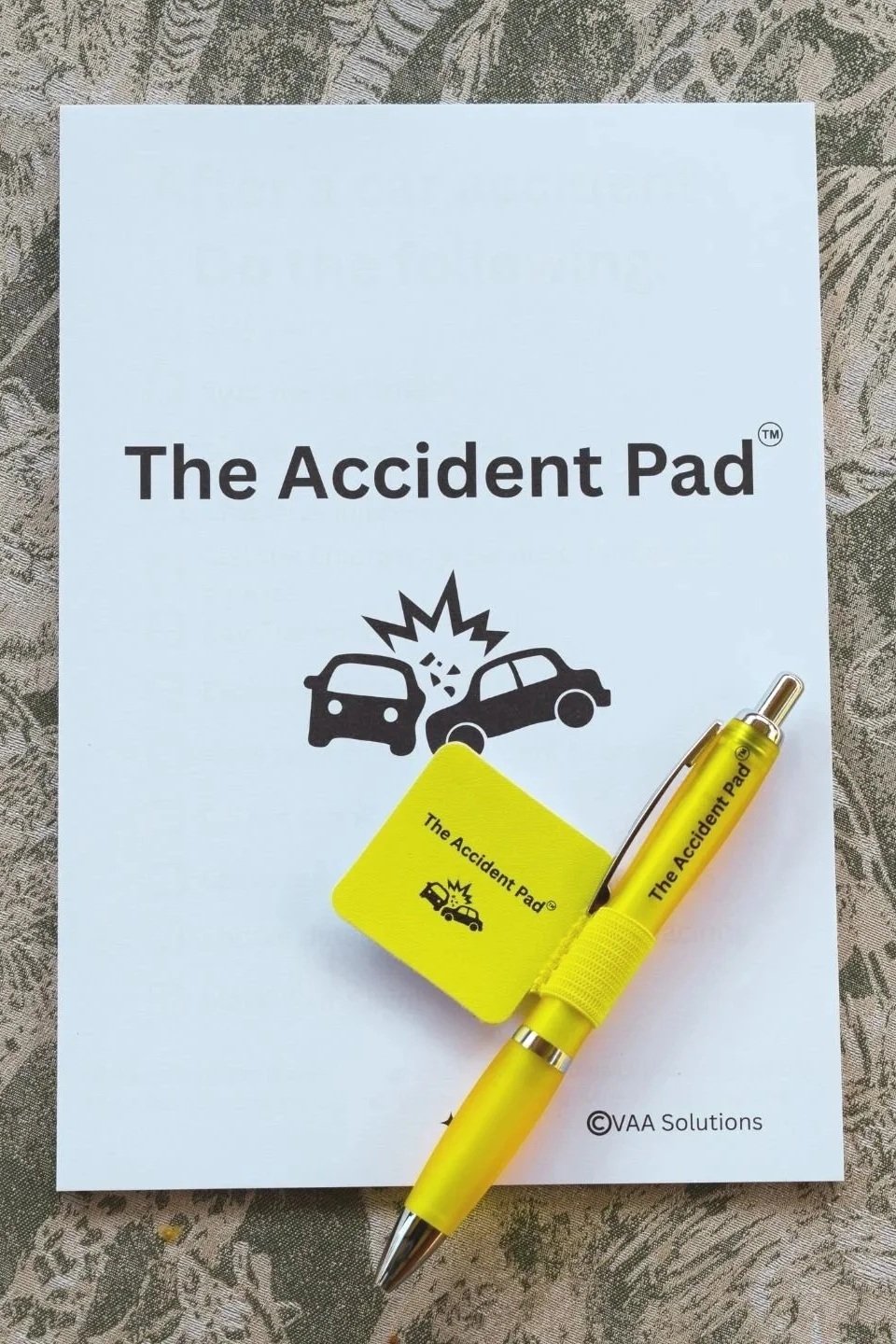
The Accident Pad is a compact (A5) pad containing all the essential prompts, checklists, and up-to-date professional advice you’ll need to capture the right details after being involved in a car accident.
SHIPPING From the 9th of March 2026
Why keep The Accident Pad in your car?
The Accident Pad is there to help you write down the right information after a road traffic accident, even if you’re feeling shaken up, distracted, or just a bit all over the place. It helps you stay organised, makes it easier to gather the important details, and gives you something clear to follow when your brain is still trying to catch up with what’s just happened.
It’s one of those things you hope you’ll never need, but if you do, you’ll be very glad it’s there.
FAQs about The Accident Pad
Just in case you’ve got a few questions buzzing around after reading this, I’ve answered some of the ones I get asked most often below. Hopefully it helps make things a little clearer.
What is The Accident Pad?
The Accident Pad is a glovebox-sized pad designed to help drivers record important information after a road traffic accident. It includes prompts and guidance to help you capture the key details clearly and safely.
Why do I need The Accident Pad in my car?
After an accident, even a minor one, it’s easy to forget important details. The Accident Pad gives you a simple structure to follow, helping you stay organised and record the information you may need later.
What details should I collect after a car accident?
You’ll usually want to collect details such as names, contact information, vehicle registration numbers, insurance information, the location, the time, and witness details where possible. The Accident Pad helps guide you through that process.
Is The Accident Pad useful for minor accidents?
Yes, absolutely. Even if an accident seems minor at the time, details can become very important later, especially if there’s a dispute or an insurance claim. Keeping a clear record can make things much easier.
Can The Accident Pad be used for company vehicles?
Yes. The Accident Pad can be really useful for businesses with company cars or vans, as it helps employees record the right information after an accident. It can also make insurance claims and internal reporting much more straightforward.
Is The Accident Pad only for new drivers?
Not at all. The Accident Pad is useful for drivers of all ages and experience levels. Even confident, experienced drivers can feel flustered after an accident, so having a clear guide to follow can be a real help.
Where should I keep The Accident Pad?
The best place to keep The Accident Pad is in your glovebox, so it’s easy to find if you ever need it.
Safe driving everyone
Jenna x