If you’re a young or newly qualified driver, you probably don’t need me to tell you how expensive car insurance is right now.
But, I’m going to tell you anyway.
Many young and newly qualified drivers in the UK are now paying somewhere between £2,000–£3,000 a year for insurance, with some brand-new 17-year-olds paying even more than that in their first year on the road. But, no matter how old you are, insurance isn’t cheap, especially after an accident.
However, you do have some powers that could help reduce your post-accident premium, and one of those powers is simply remembering more about the accident, something much easier said than done.
In this article, I dig deeper into why we don’t remember key details (even though we think we do), which details insurers are asking for in 2026, and how The Accident Pad could be the thing that keeps your premiums down.
The Problem Is… Your Brain Doesn't Always Cooperate After an Accident
Most people believe they'll remember everything afterwards.
I used to think exactly the same thing... until I had an accident.
When you're actually standing at the side of the road after a collision, it's amazing how quickly your mind can go blank. Even if nobody is seriously hurt, your body immediately recognises that something unusual and potentially dangerous has happened.
Your heart rate increases. Your adrenaline kicks in. Your brain switches into a heightened state of alertness.
Whilst that response is designed to help keep you safe, it isn't always great for remembering details.
In fact, psychologists have known for years that stress can affect how memories are formed and recalled. When adrenaline and cortisol levels rise, the brain often focuses on immediate threats and important survival information rather than recording every detail of an event in a neat, organised way.
That's one reason why people involved in accidents can sometimes give slightly different accounts of exactly what happened, even when they're being completely honest.
Meanwhile, traffic is building up around you and you're suddenly trying to think about:
Registration numbers
Insurance details
Witnesses
Photographs
What was said
What you're even supposed to do next
Believe me... it's a lot to deal with in one moment.
And because of that, important details often get missed without people even realising it.
You forget to take photographs. You don't collect witness information. You tell yourself you'll remember exactly where the vehicles were positioned or what the other driver said.
But memory isn't like a video recording.
Every time we recall an event, our brains reconstruct parts of it from fragments of information. The longer we leave it, the more those details can become fuzzy, especially after a stressful experience.
That's why recording information at the scene is so important.
Unfortunately, when insurance companies start asking questions days or weeks later, missing details can make the claims process far more stressful than it needs to be. Having clear notes, photographs and witness information from the outset can make a huge difference.
Why Clear Information Matters So Much
When insurers investigate accidents, they rely heavily on the information they’re given. The clearer and more accurate the details are, the easier it becomes to properly understand what happened and who was responsible.
And for young drivers especially, that really matters.
Because insurance premiums are already incredibly high for younger age groups, disputed claims or unclear accident details can sometimes make situations even more difficult later on.
Now obviously, no accident pad can magically stop premiums rising overnight.
But being organised after an accident can help reduce confusion, avoid missing key information and make the whole claims process feel far less overwhelming.
And when you’re already stressed, that reassurance matters a lot.
So, what information do insurers want after an accident in 2026?
One of the biggest surprises for many drivers is just how much information insurers ask for after an accident.
Most people assume they'll only need the other driver's name and registration number. In reality, insurers often want a much more complete picture of what happened, especially if liability is disputed or there are injuries involved.
Whilst requirements vary slightly between insurers, you'll usually be asked for:
✅The names, addresses, phone numbers and insurance details of everyone involved
✅Vehicle registration numbers, makes and models
✅The exact date, time and location of the accident
✅Photographs of vehicle damage, the road layout and surrounding conditions
✅Witness names and contact details
✅Details of any injuries, however minor they may seem at the time
✅Information about weather, road conditions and visibility
✅A clear account of what happened before, during and immediately after the collision
The challenge is that accidents rarely happen when you're calm and thinking clearly. Even a minor bump can leave drivers feeling stressed, distracted and overwhelmed, making it surprisingly easy to forget important details.
That's one of the reasons The Accident Pad is structured the way it is. Rather than trying to remember everything insurers might ask for days or weeks later, drivers can record the key information while they're still at the scene.
The result is less guesswork, fewer forgotten details and a much clearer record of what actually happened.
And That’s Exactly Why I Created The Accident Pad
I wanted something simple, practical and genuinely helpful that people could keep in their glovebox and use during one of the most stressful moments you can experience on the road.
Not something complicated and full of legal jargon that makes people panic even more. Just a calm, step-by-step guide to help drivers stay more organised when their head’s understandably all over the place.
Here’s what The Accident Pad helps drivers do:
✔️Record driver and witness details properly
Having the correct names, contact details and insurance information written down at the scene can make things much easier later on. Witness details can also become incredibly important if accounts of the accident differ afterwards.
✔️Remember important photographs and evidence
In the moment, it’s easy to forget to take photos or miss useful angles. The Accident Pad helps remind drivers to capture the kind of evidence insurers often ask for later, including vehicle damage, road positioning and conditions.
✔️Note injuries and road conditions clearly
Even small details can matter after an accident. Recording things like weather conditions, road surfaces or injuries early on can help create a much clearer picture of what happened.
✔️Capture the details insurers usually ask for
One of the most stressful parts of an accident is trying to remember information afterwards when insurers start asking questions. The Accident Pad helps drivers collect the key details while they’re still fresh.
✔️Stay calmer and more focused after an accident
Accidents can leave people shocked and overwhelmed, even when they’re minor. Having a simple step-by-step guide to follow can help drivers feel more organised and a little less panicked in the moment.
It’s Also About Confidence and Peace of Mind
If you’re a parent of a young driver, you might have muttered these words: “I just worry they wouldn’t know what to do.” And that’s completely understandable.
However, it’s not just young drivers. Most drivers (if they’re honest) don’t really know what to do because they don’t expect to have an accident.
But The Accident Pad isn’t about expecting the worst. It’s about feeling and being more prepared just in case something unexpected happens. For young drivers, it can provide reassurance that they’ve got something practical sitting in the glovebox ready to help.
And for parents, it can offer a bit of peace of mind too.
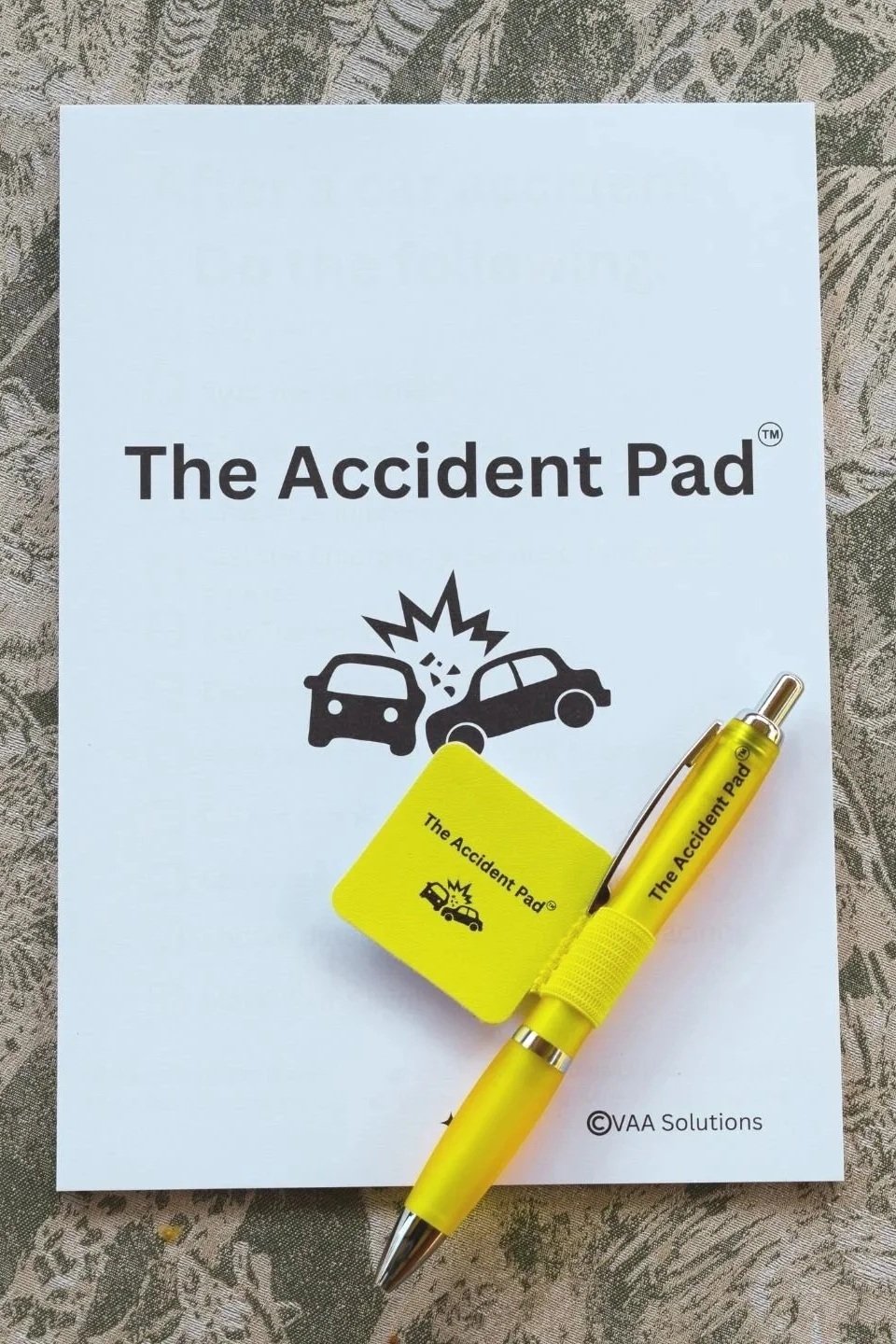
The Accident Pad is a compact (A5) pad containing all the essential prompts, checklists, and up-to-date professional advice you’ll need to capture the right details after being involved in a car accident.
SHIPPING From the 9th of March 2026

Have you subscribed to the AP Newsletter?
As someone absolutely passionate about helping drivers and other road users stay safe and deal with accidents with more accuracy and confidence, I’ve created The Accident Pad Newsletter.
Put out just once a month, The Accident Pad Newsletter delivers practical driving advice and actionable tips, from the professionals, news about the latest UK driving laws, and some fun stuff, too.
If you haven’t already subscribed, I’ve love your support so please sign up below and join The Accident Pad community.
Safe driving,
Jenna x
Frequently Asked Questions About The Accident Pad and What To Do After a Car Accident
Before I let you go, I thought I'd answer a few of the questions I get asked most often about accidents, young drivers and The Accident Pad.
If you've ever wondered what information you're supposed to collect after an accident, whether witnesses really matter or if The Accident Pad is only for young drivers, hopefully these answers will help.
What information should I collect after a car accident?
After an accident, you should collect the other driver's name, address, contact details, vehicle registration number, insurance information and details of the vehicles involved. It's also a good idea to take photographs of the scene, vehicle damage, road conditions and any relevant road signs. If there are witnesses, try to collect their contact details too.
Why are witness details important after an accident?
Witnesses can sometimes provide an independent account of what happened. If there is a disagreement between drivers about how an accident occurred, witness statements can help insurers understand the situation more clearly. Because people often leave the scene quickly, it's important to collect witness details before they disappear.
Can I rely on my memory after a road traffic accident?
Most people believe they'll remember everything after an accident, but stress and adrenaline can affect memory surprisingly quickly. Important details such as conversations, vehicle positions, weather conditions and witness information can easily be forgotten. Recording information at the scene can help ensure nothing important is missed.
What photographs should I take after a car accident?
Try to photograph all vehicle damage, the position of the vehicles, road markings, traffic signs, weather conditions and anything else that may help explain how the accident happened. The more evidence you collect at the scene, the easier it can be to answer questions later from insurers.
Is The Accident Pad only for young drivers?
Not at all. Whilst many parents buy The Accident Pad for young or newly qualified drivers, it's designed for anyone who wants to feel more prepared after an accident. The reality is that most drivers don't expect to have an accident, so most drivers aren't fully prepared when one happens.
Does The Accident Pad help with insurance claims?
The Accident Pad doesn't handle insurance claims directly, but it helps drivers collect the information insurers typically ask for after an accident. Having accurate details, photographs and witness information can make the claims process feel much less stressful and help avoid important details being overlooked.
Should I keep an accident report form in my glovebox?
Yes. Having an accident report form in your glovebox means you'll always have a structured way to record important information if an accident occurs. Many drivers don't realise what information they need until they're standing at the roadside trying to remember it under pressure.
What should a young driver do immediately after an accident?
First, make sure everyone is safe and seek emergency assistance if needed. Once it's safe to do so, exchange details with the other driver, gather witness information, take photographs and record as much information about the accident as possible. Staying calm and organised can make a huge difference later on.